


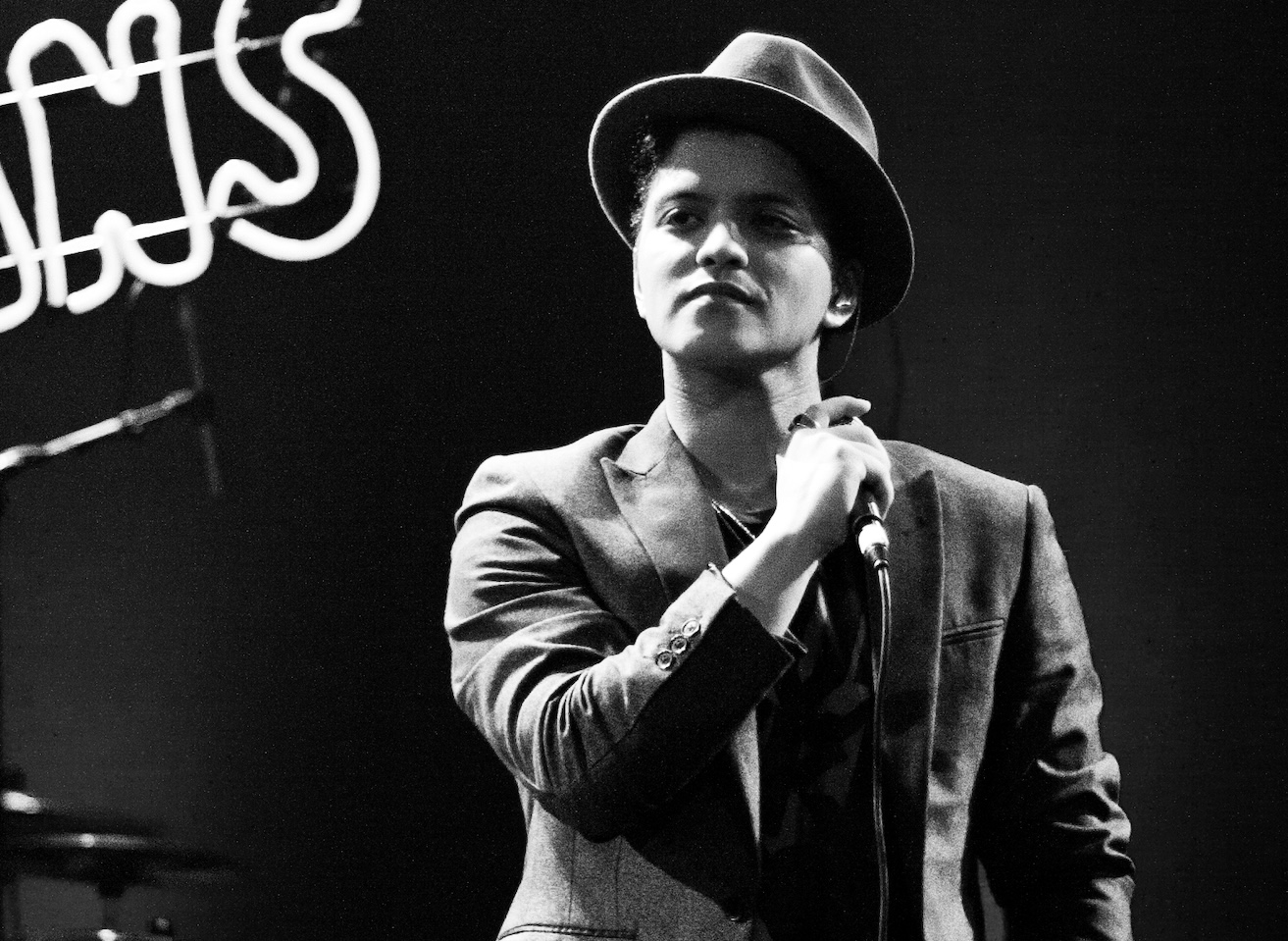
With “The Romantic,” Bruno Mars’ first album in nearly ten years, he steps into what feels like his most mature era yet. This is his fourth solo studio album, and the title is perfectly chosen.
Instead of centering on longing, heartbreak, or the chaos of chasing love, this project lives in the blissful, intimate harmony you find when you’ve grown up and found something real. It’s passionate without being dramatic, sensual without being performative. There’s a calm confidence throughout the album — like someone who no longer questions love but understands it.
One of the most striking elements is how deeply Bruno leans into his Latin roots. You can hear it immediately. From the bolero textures on “Risk It All,” where his melody floats effortlessly over the rhythm, to the groovy, rhythmic pulse of “Cha Cha Cha,” he sounds fully immersed in these influences.
The bossa nova moment especially caught me off guard — I didn’t expect it, but it works beautifully. His voice carries such emotional weight over it that you can feel both yearning and peace at the same time. “Cha Cha Cha” feels like a confident cultural embrace, almost reminiscent of how artists like Bad Bunny have re-centered their roots in modern music.
And when the outro tempo lifts? That shift elevates the entire song and shows Bruno’s mastery of dynamics.
As the album unfolds, it becomes clear that “The Romantic” is intentionally slower than much of his previous work. Songs like “God Was Showing Off” and “Why You Wanna Fight?” lean into vulnerability and reflection.
The Spanish intro on “God Was Showing Off” had me expecting a full Spanish verse, but even without it, the track feels grand and emotionally heavy. The longing and devotion are strong themes throughout this middle stretch of the album.
While I do miss some of the high-energy Bruno we’re used to, there’s something admirable about how committed he is to this slower, more intimate pace.
That said, he doesn’t abandon groove entirely. “I Just Might” is still a standout for me — effortlessly catchy, danceable, and reminiscent of vintage Bruno but with a modern polish.
It proves that he can make even a relatively simple structure feel elite through vocal control and smart production. Then “On My Soul” delivers the energy I’d been waiting for: bongos, a deep bassline, disco influence, and a saxophone that adds richness and movement.
It’s sensual, playful, and rhythm-driven in a way that reminds you Bruno can still command a dance floor whenever he wants.
By the time we reach “Something Serious” and “Nothing Left,” the emotional depth of the album feels fully cemented. There’s jazz influence woven in, subtle modulation choices, and stronger, more pronounced vocal deliveries that add gravity.
The instrumentation across these tracks feels intentional and layered, never overwhelming but always supportive of the emotional core. It feels rawer here — like the stakes of the love story are clearer.
Closing with “Dance With Me” feels cinematic. The opening notes strangely reminded me of “Yellow” by Coldplay, but the song quickly becomes its own emotional moment — a culmination of the entire journey.
It sounds like the final scene of a love story, asking for one more dance. The choir behind him elevates it beautifully, giving the ending a grand, almost timeless feel.
Overall, “The Romantic” is Bruno Mars fully in control of his artistry. It’s slower, more reflective, and deeply rooted in culture and emotional maturity. While part of me still craves a couple more explosive, uptempo moments, this album proves that he doesn’t need to rely on flashy hits.
He can lean into passion, heritage, and musical exploration — and still make it feel effortless.This isn’t Bruno chasing love. This is Bruno living in it.