


For many college students, drinking large amounts of caffeine has become routine. Late nights bleed into early mornings, caffeine replaces sleep and energy drinks sit on every library desk.
Alex Jimenez noticed this pattern — and found it concerning.
Jimenez, a UM senior majoring in economics and entrepreneurship, said watching his classmates struggle with focus and rest made him question why they were relying on harsh chemicals to manage everyday problems.
“That didn’t sit right with me,” Jimenez said.
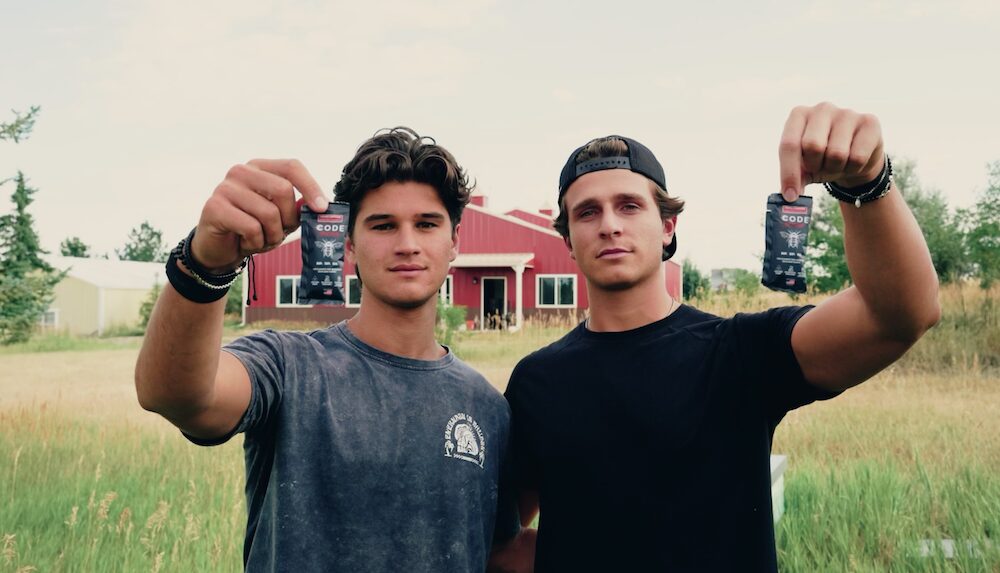
That concern led Jimenez to launch CODE Nutra, his nutrition brand, and one of its first products, CODE Nectar, a raw-honey based performance product that brings the energy boost without artificial ingredients.
Rather than selling traditional powdered supplements, CODE packages its formulas in single-serve honey sachets meant to be consumed directly — a format that reflects Jimenez’s broader belief that performance nutrition should begin with simple, whole ingredients.
CODE centers around simple, recognizable ingredients including raw honey, green tea extract and guarana for caffeine, L-theanine to smooth out stimulation, beetroot for circulation, and Redmond sea salt for hydration.
“Most people don’t think of honey as performance nutrition. I didn’t either at first,” Jimenez said. “But the more I looked into it, the more I realized it’s real fuel.”
The natural sugars in raw honey provide quick and steady energy, making it a logical base for the product.
“It’s meant to feel like a safe place in an industry that often isn’t,” Jimenez said. “When you buy from CODE, you know exactly what you’re getting. No hidden ingredients. No fine print.”
Jimenez saw an even greater need for CODE when he tore his ACL twice. While recovering, he searched for faster ways to get back to normal.
“Doctors told me 10 months minimum before I’d be back. I told myself I’d do it in six,” Jimenez said.
He started experimenting with different recovery strategies. What worked for him wasn’t a new piece of equipment or different therapy methods, but changing his diet.
“I cut out processed foods and focused on whole foods,” Jimenez said. “My recovery accelerated. But more than that, my energy changed. My clarity changed.”
The experience reshaped how he viewed health and performance. He began to see what he describes as a disconnect between how people want to feel and what they actually put into their bodies.
Watching classmates struggle with burnout, focus and fatigue only reinforced that belief.
“Most people aren’t unhealthy because they want to be,” Jimenez said. “They just don’t know better.”
Turning that idea into a tangible product meant learning the business from the ground up.
Jimenez initially launched CODE using pre-made supplement formulas sourced from a manufacturer — a common industry practice known as white labeling — to better understand how the supplement market and e-commerce operated.
“There were moments when my bank account was basically empty and all my money was sitting in inventory,” Jimenez said. “That’s scary. But that’s also how you learn. You either figure it out or you stop.”
As revenue grew, he reinvested in the brand and shifted away from pre-made blends, seeking greater control over ingredients and sourcing.
One of the biggest turning points came when he partnered directly with a honey farm and manufacturer in Colorado, allowing him to source raw honey at the foundation of his products and develop his own formulations from scratch.
From there, CODE evolved into a fully custom brand, with Jimenez overseeing everything from sourcing raw materials to designing packaging and coordinating production across different states.
Being a student founder meant there was no clear separation between school life and business life. CODE followed him everywhere — between classes, to the gym and back home late at night.
“You are the company,” Jimenez said. “There’s no clocking out. If you slow down, it slows down.”
He credits the University of Miami environment with helping shape the brand’s direction. Surrounded by athletes, fitness culture and a campus that emphasizes performance and ambition, he found himself constantly inspired by the people around him.
“Being in Miami, surrounded by high performers, reinforces what CODE stands for,” Jimenez said.
Jimenez began sharing products with fellow ’Canes and athletes, collecting feedback and watching how they integrated CODE into their routines. The response, he said, has been both validating and motivating.
“Seeing people actually feel better using something I created — that’s the real win,” Jimenez said.
Looking ahead, he envisions CODE growing beyond performance nutrition into a broader lifestyle brand that includes skincare and recovery products.
The long-term goal, he said, is to build something that lasts — something rooted in transparency and simple ingredients rather than passing trends.
“The name ‘CODE’ comes from the idea that we are both the program and the programmer,” Jimenez said. “You can shape your life. What you put into your body matters.”