



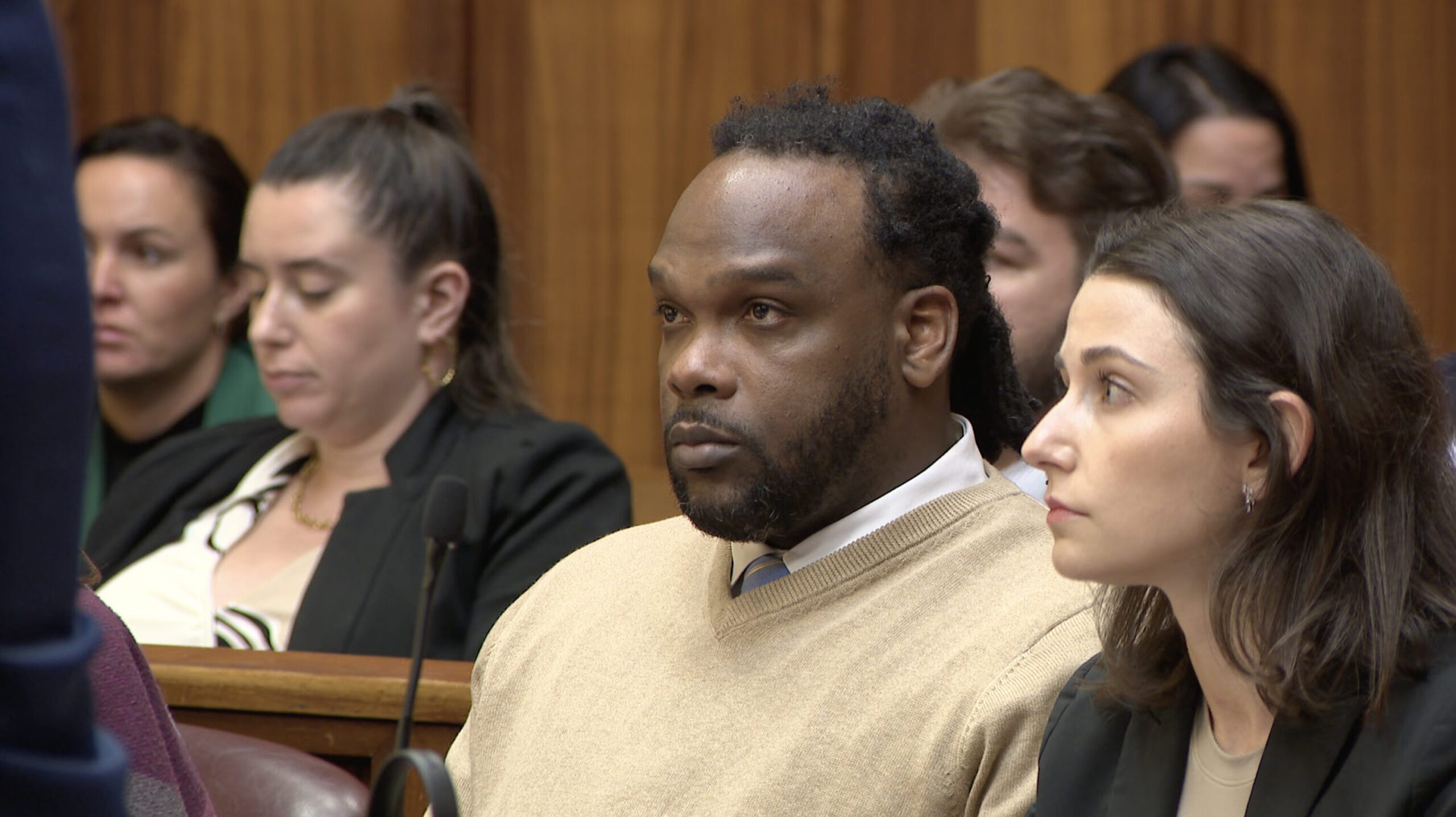
The trial of Rashaun Jones for the alleged murder of his former UM football teammate, Bryan Pata, is coming to a close nearly 20 years after Pata was killed.
The trial continued on Wednesday, Feb. 25, starting with testimony from Sgt. Sergio Cremisini, current supervisor of the Homicide Intelligence Department for the Miami-Dade Sheriff’s Office homicide unit.
The prosecution argued that jealousy drove Jones to kill Pata. They cited circumstantial evidence, including Jones’ behavior and phone records from the night of the murder, while the defense asked the court to dismiss the charges and not give the case to the jury.
“There is no way the jury could find that Mr. Jones committed this crime beyond a reasonable doubt,” said defense attorney Sara Alvarez.
Cremisini reviewed cell phone records for the defendant, Rashaun Jones, including date, time, duration, and approximate location of calls made or received through local cell towers.
The prosecution asked Cremisini about Jones’ calls on the night of the murder between Jones and his ex-girlfriend, Sherry Abramson, who had called Jones repeatedly after she found out about the incident.
The prosecution highlighted Jones’ use of *67, a feature that hides the caller’s phone number from recipients, displaying the name as “unknown.” Although the recipient will not see the caller’s name, cell records still reflect the caller’s ID.
Records show Jones used *67 several times to call Abramson, while the prosecution argued and questioned why he specifically used *67 on the day of the homicide.
“Why would you call your girlfriend from a blocked number?” said state attorney Cristina Diamond. “The records speak for themselves.”
The prosecution also pointed to Jones’ cellular connection to different cell towers, specifically tower 142, a tower located near Pata’s apartment.
“Are the records consistent with someone who was home all night?” the prosecution asked.
“No,” Cremisini answered.
Defense attorney Christian Maroni heavily questioned Cremisini during the cross-examination.
“You can’t testify at all ― you have no knowledge ― none of this information that you’ve testified about sheds any light on where Mr. Jones’ phone was at the time the homicide occurred, correct?” Maroni asked.
“Yes, that’s correct,” Cremisini said.
Following Cremisini’s testimony prior to closing arguments, Dr. Emma Lew, the former chief medical examiner for Miami-Dade County, testified that Pata died of a gunshot wound to the head.
“The manner of death was homicide,” she testified.
Closing statements followed at 3:46 p.m. on Wednesday, Feb. 25, meaning that the verdict will be announced at sentencing upon the jury’s decision.
The prosecution discussed Jones’ character, reminding the jury of difficulties Jones faced and the complicated relationship he had with Pata, who they argued was thriving.
“Bryan has everything the defense wants, and he chooses to let jealousy overtake him and kill Bryan Pata,” Pata’s legal team argued.
They touched on what the prosecution described as Jones’ “unimpressive” collegiate career, despite being a promising high school recruit.
Prosecutors noted that this affected Jones’ mindset, worsening what they claimed was an already existent distaste for Pata.
“That dream [of playing in the NFL] ended because of the jealousy of the defendant,” said state attorney Cristina Diamond.
The prosecution then discussed the victim, Bryan Pata, and his character.
Diamond cited Pata’s ambitions for the NFL, his relationship with his girlfriend, Jada Brody, and his successful car-detailing work as reasons for Jones’ jealousy.
Among teammates, coaches and detectives, the case centered around an eyewitness account from Paul Conner, a former UM English teacher, who was “90% certain” he saw Jones leaving Pata’s residence after hearing a gunshot.
Pata’s attorney used this alleged sighting as proof that Jones was guilty beyond a reasonable doubt.
However, the defense’s responding statements said otherwise.
Defense attorney Sara Alvarez questioned the validity of Conner’s statement, citing evidence that Conner was proven to have poor eyesight and that the murder occurred at night.
Conner was presumed to be deceased, but was found alive and living in Louisville, Kentucky. He was determined unable to testify in person by the judge as a “result of significant memory issues.”
The defense also argued that the quality of Jones’ reference photo was inadequate, suggesting that Conner’s selection of Jones from a lineup of potential suspects was unreliable.
“Even if the evidence is viewed in a light most favorable to the state, it is entirely insufficient to support a conviction in this case,” said defense attorney Sara Alvarez.
The jury has not reached a verdict after hours of deliberation, and were told to return on Monday, March 2.