


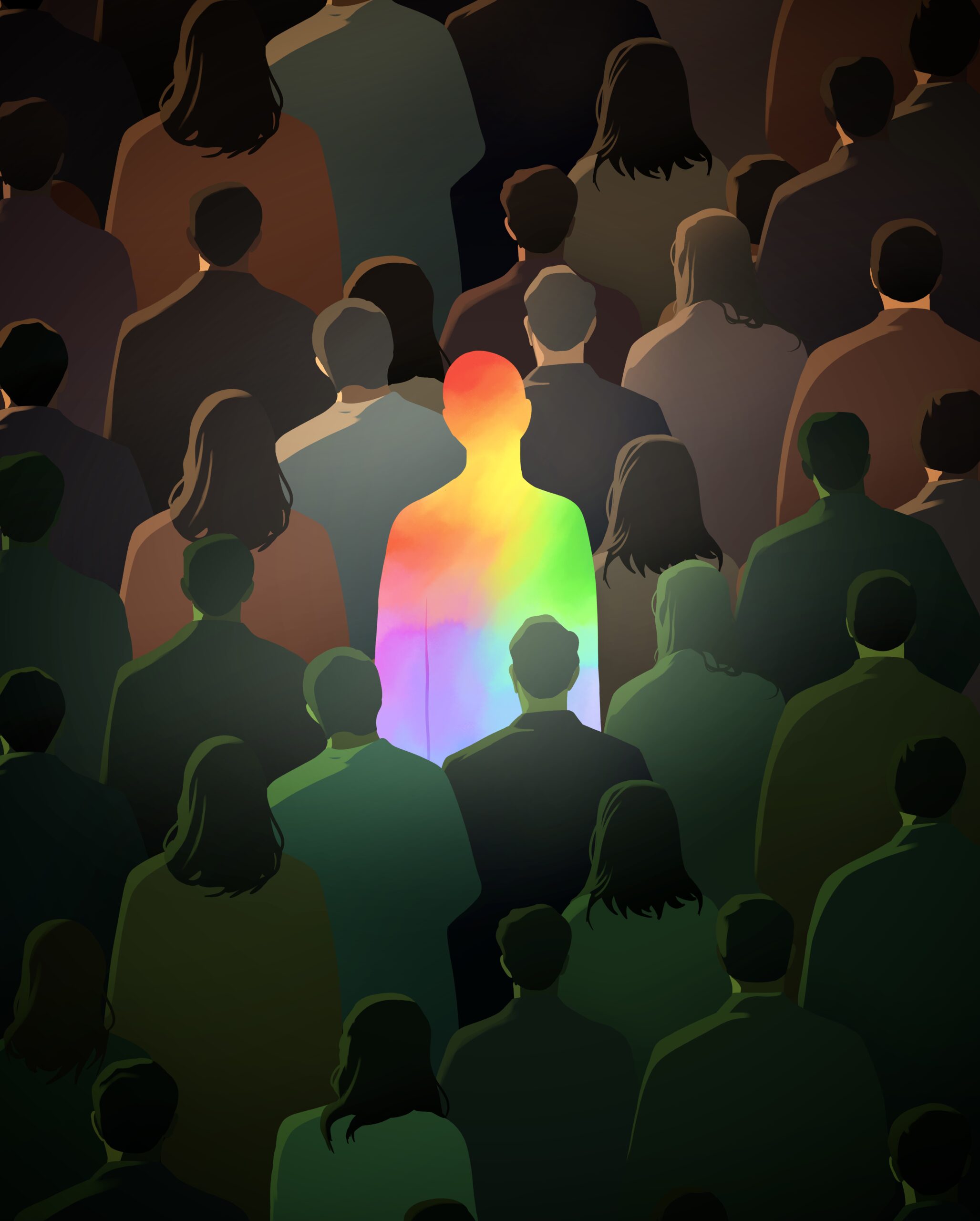
I am everywhere on campus and somehow nowhere at all.
I go to class, have multiple leadership positions on campus, attend events, create content and smile when people recognize me. On paper, I am the kind of student the University of Miami celebrates: involved, motivated, polished and busy.
But beneath the calendar invites is a quiet isolation that feels harder to admit the more socially put together I appear.
Most nights, my loneliness has a dress code.
Many of my closest friends are in Greek life. Their weekends revolve around mixers, pool parties and fraternity events that shape UM’s social scene. As an openly gay guy, I never felt comfortable rushing a fraternity. Greek life — for all its prominence — was not built with people like me in mind and I understood that early on.
That reality is the most obvious on weekends. While my friends pregame for Greek life events, I am left figuring out where I fit. As a guy, going out in Miami often means paying absurd cover fees just to enter a crowded room. Women are waved in, while men end up paying $20, $50 and sometimes even more.
Simply existing in the nightlife scene and a reminder of who is valued and who is not. As a gay guy, entry often comes with conditions. You are really only allowed in if you arrive flanked by multiple girls, your presence justified by proximity to femininity rather than accepted on its own.
Fraternity parties reflect the same dynamic. I am too masculine to be let in as one of the girls, yet at the same time, I am not masculine enough to be welcomed as one of the guys. I hover in an in-between space, visible but never fully claimed, present yet never quite belonging.
I am still perceived as competition — another man in the room — even though I am not looking to compete against them. I exist in an in-between space that feels invisible and isolating. I watch my closest friends post stories from events I cannot attend, not because I was not invited, but because I do not fit neatly into the boxes those spaces demand.
UM seniors Taveion Neasman, a Pride Ambassador for the LGBTQ+ Center, and William Harless said fraternity and party culture at the University of Miami often make being openly gay feel conditional rather than truly welcoming.
“The nightlife scene and Greek life are definitely points of tension for many gay students,” Neasman said. “Fraternities are incredibly heteronormative. You either have to be hypermasculine or quiet about who you are.”
Harless said that dynamic extends beyond campus and into Miami’s nightlife, where gay men are often treated as disposable.
“You’re seen as a guy who ‘throws off the ratio,’ even when you’re gay,” Harless said. “More masculine-presenting gay men have it easier if they conform or stay in the closet.”
Neither student said exclusion always looks overt, but both described environments that feel unwelcoming by design.
“I’ve never felt directly discriminated against,” Neasman said. “But I’ve overheard gay students being turned into jokes. Homophobia exists, even when it’s subtle.”
Harless said those systems quietly decide who belongs.
“Not everyone is homophobic,” he said. “But the social norms are, and they determine who gets let in and who gets left out.”
Neasman said support on campus often feels limited to the LGBTQ+ Center rather than woven into everyday student life.
“Integration is being invited to the party,” he said. “Inclusion is being asked to dance.”
During the week, I am everywhere. I contribute to campus life in ways that are publicly celebrated. To many, it looks like I have it all together socially. Yet even in a room full of people, I still feel alone.
There is an unspoken pressure at UM to always be thriving. Being surrounded by people does not guarantee connection, and being involved does not mean being seen. I move from meeting to meeting with a full schedule and a familiar face, but behind the constant motion, few people ever ask how I am actually doing. Loneliness does not always look like eating alone on a campus glider. Sometimes, it looks like showing up to everything and still feeling invisible.
This campus often talks about community and less about the emotional distance that exists in it. Students who appear the most connected can and do still feel isolated.
Loneliness isn’t cured by a strong resume, leadership titles or a packed social calendar. Sometimes it comes not from having no friends at all, but from having friends whose worlds you’re never fully allowed to step into.
UM is a place filled with ambition, energy and pride. But belonging cannot be measured by involvement alone. Even the people who appear the most socially put together can still feel isolated, unsure of where they truly fit. If Miami truly wants to foster belonging, it must make space for honesty, especially from those who seem like they already have it all figured out.