


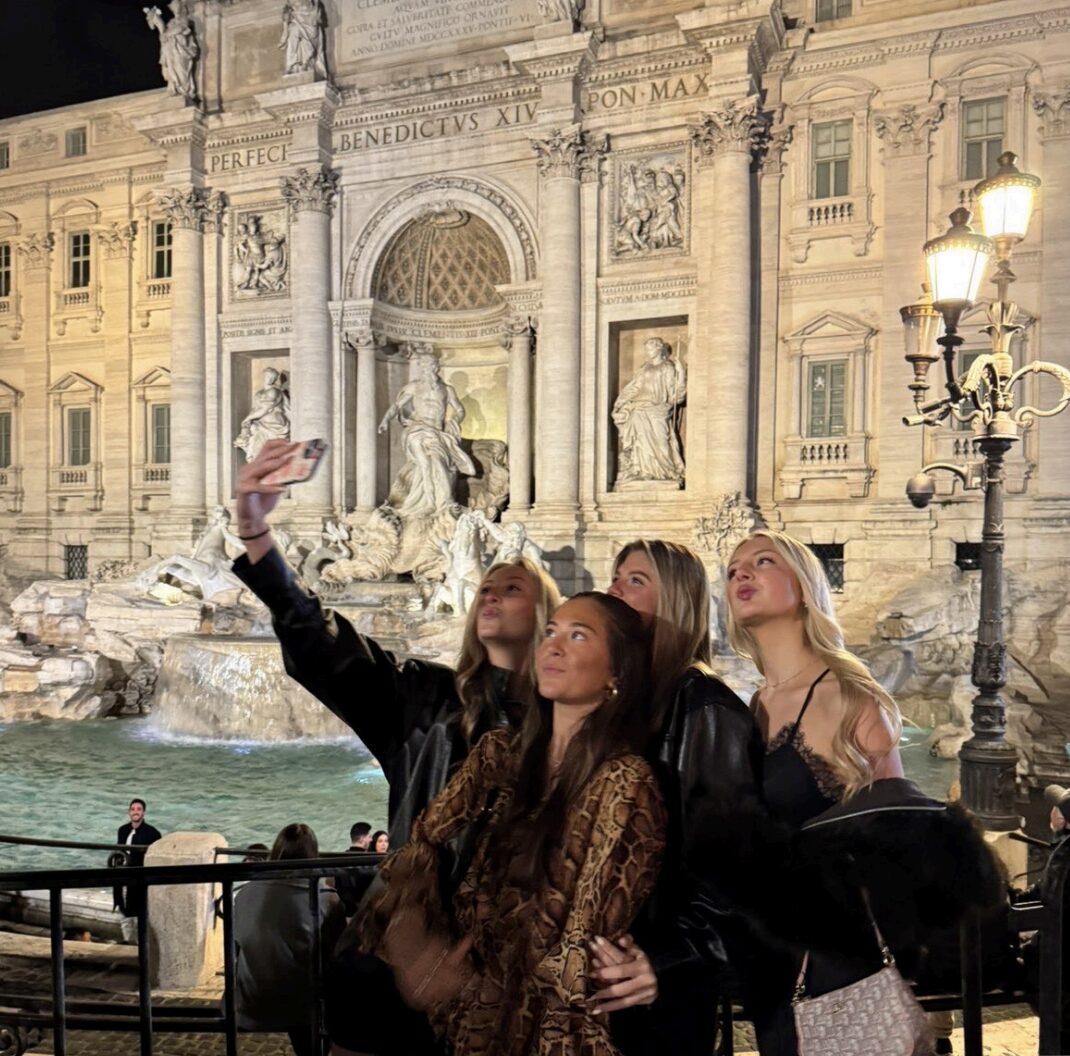
Traveling to a new country isn’t just a change of scenery — it’s a collision with an entirely different way of living. Different rhythms, different rules and different expectations for how you move through the world and treat the people around you.
That kind of immersion is a privilege, but it can also be intimidating. The truth is, cultural adjustment takes time.
When I left to study abroad in Rome, I expected culture shock. I thought my biggest challenge would be the language. What I didn’t anticipate was everything around the language: the unspoken etiquette, the respectful forms of address, the social cues and the norms that are second nature to Italians but completely unfamiliar to Americans.
If you want to avoid embarrassing yourself, a bit of preparation goes a long way.
So consider this your Rome survival guide: the dos and don’ts that will help you navigate the city with more confidence, more respect and a lot less “American tourist” energy. Because if you’re going to travel, you might as well learn how to live like you belong there.
Dos: Learn the the language (at least the basics)
You don’t need to be fluent in Italian to travel to Italy. In most tourist areas, you’ll find that many people speak English, and will greet you in English before you even open your mouth.
But that doesn’t mean you should arrive unprepared. Learn a few key polite phrases like “grazie” (thank you), “per favore” (please) and “buongiorno” (good evening).
Not only will it make everyday interactions smoother, but it also shows you respect the local culture. It signals that you made an effort, have taken time to prepare and that you don’t assume the world should accommodate you.
That said, language isn’t just about knowing words. It’s about knowing when and how to use them.
Don’t: Use “ciao” with strangers
I arrived in Rome with a basic Duolingo understanding of Italian. I knew “ciao” meant hello, but I didn’t realize it’s informal, reserved for friends, family and children.
In Italy, it’s considered rude to enter a shop without greeting the storekeeper. So I confidently walked into stores saying “ciao” to everyone, until my Italian teacher finally corrected me: when greeting strangers or adults, you should say “buongiorno” (good morning) or “buonasera” (good evening).
Italians take formality seriously, and respect is built into the language. When in doubt, choose the more formal greeting. It’s the easiest way to avoid coming off too casual — or worse, disrespectful.
Do: Say “permesso,” not “scusa”
Another phrase I misused early on was “scusa” (excuse me). In English, “excuse me” works for everything: squeezing past someone, getting attention, interrupting.
In Italy, that’s not the case.
If you’re trying to move through a crowd or slip by someone on the street, use “permesso,” which essentially means “may I pass?”
If you say “scusa,” you’re more likely trying to get someone’s attention. I learned this the hard way when I said it while attempting to pass an older man in a store and he just laughed and didn’t move an inch.
Don’t: Guess labels
This one seems obvious, until you’re tired, in a rush and don’t feel like pulling out Google Translate.
Don’t guess anyway.
I learned this the hard way when my roommate once grabbed a random spray bottle from our closet and started spraying it all over the room after spotting a bug. Only after our nostrils started burning did we realize what it was: degreaser — strong, toxic and not something you want to inhale.
A five-second translation check is worth it. Always.
Do: Pay attention to the cafe ordering system
Now, let’s talk coffee, or as the Italians would say “espresso,” because there may be more rules in bars ( the Italian word for a cafe) than in the language itself.
Before you order, watch how the place works. In many cafes, the general rule is ‘pay first, drink later.’ You pay at the register, receive a receipt and bring it to the barista at the counter — how most American cafes are. Some people even leave a small tip with the receipt to get the barista’s attention.
In smaller neighborhood spots, though, you may do the opposite: order first, drink your coffee and then tell the cashier what you had on your way out. I noticed this most often in Trastevere, where local routines matter more than rigid systems.
Bottom line: observe first, then follow.
Don’t: Ask for coffee to-go
Italians embrace a daily philosophy known as “la vita lenta” (the slow life), prioritizing quality of life, relationships and the enjoyment of the present moment over speed and productivity.
With that mindset, coffee is meant to be enjoyed on-site, not rushed out the door in a paper cup. I learned this the hard way when I asked for a cappuccino to-go and the barista physically recoiled before asking “Are you sure?,” like I had just committed a crime.
To be fair, “enjoying coffee” in Italy doesn’t always mean sitting for an hour. Many Italians drink their espresso quickly while standing at the counter. It’s a brief social pause — just a few minutes to chat, breathe and move on.
Lunch and dinner, though? Those are a different story.
Do: Ask for the check.
In Italy, meals aren’t rushed. Lunch and dinner aren’t just about eating, they’re about savoring. They’re social rituals, often lasting one to three hours, with time built in for conversation, digestion and connection.
Therefore, it’s considered rude for servers to push you out. So, if you’re waiting for the check to arrive automatically, you may be waiting forever.
When you’re ready to leave, you need to ask: “Il conto, per favore.”
During my first solo meal in Italy, I sat for thirty minutes with an empty plate, confused, wondering why my waiter kept staring at me. I wasn’t being ignored, I just didn’t know the rule.
Do: Check store hours
The importance of lunch and dinner extends beyond restaurants. Many shops close during ‘riposo,’ a midday break where shopkeepers take time for a proper lunch, or perhaps a nap.
This pause often happens between 1 p.m. and 4 p.m., so check store hours ahead of time. Otherwise, you’ll find yourself standing outside a closed shop, hungry, frustrated and staring at a sign you can’t translate fast enough.
Do: Give yourself grace.
Adjusting to a new culture can be overwhelming, and at times, embarrassing. You’ll use the wrong phrase. You’ll break social rules. You’ll have awkward interactions you replay in your head for days.
But give yourself grace.
As long as you’re trying — making an effort, paying attention and showing respect — people notice. And more often than not, they’ll meet you with patience.
Rome doesn’t expect you to be perfect. It just asks that you show up willing to learn.