


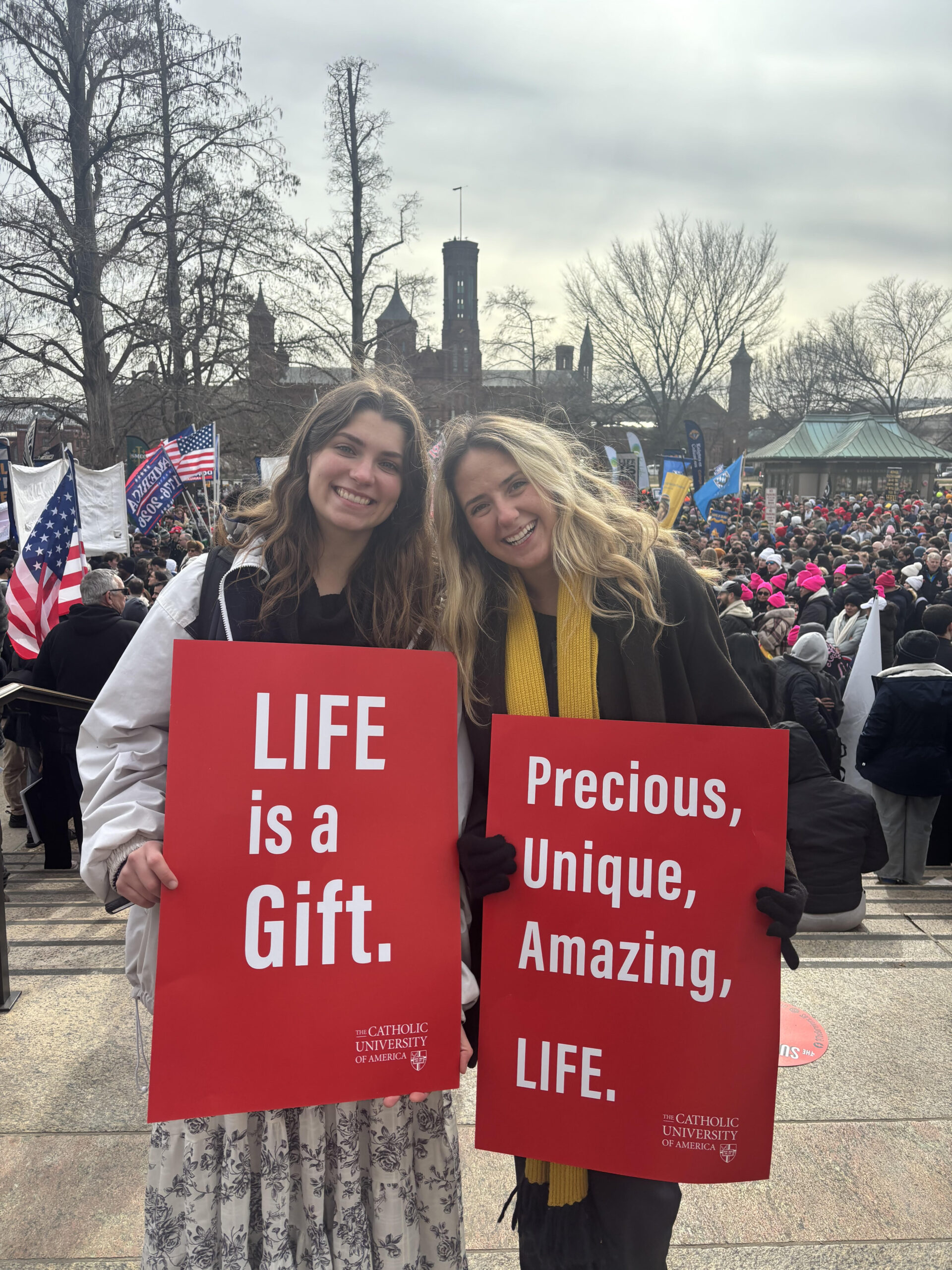
As single-digit temperatures settled over most of the country — except Miami — I bundled myself in scarves and layers of clothes among hundreds of thousands in Washington, D.C. attending the annual March for Life on Jan. 23.
The March for Life began in 1973 in response to Roe v. Wade. But this year, I was marching for more than just to oppose abortion — and I hoped everyone else was too.
The cause is mostly focused on abortion. But the sanctity of life does not begin and end in the womb and marching should not be reserved for one cause. A movement that focuses on the right to life must apply universally: It should protect mothers carrying a child, oppose the death penalty and euthanasia, recognize the humanity of immigrants and reject policies or actions that strip people of their dignity.
I attended March for Life summits and participated in the march because I am an advocate for life. So, it was a shock to learn about the altercation involving ICE agents and the killing of Alex Pretti.
Pretti, an ICU nurse at the Veterans Affairs hospital in Minneapolis, was shot 10 times on Saturday, Jan. 24, during an altercation at an anti-ICE protest. Moments before his death, video shows him recording ICE agents and attempting to help a woman who was being pepper-sprayed. When he intervened, he was pepper-sprayed and thrown to the ground.
Pretti was legally carrying a 9 mm semiautomatic handgun in his back pocket. He had a valid permit under Minnesota’s conceal-and-carry law and never removed the weapon. ICE agents disarmed him. He was then shot and killed.
Was pepper spray not enough? Was disarming him not enough? Whether you are Republican or Democrat, pro-ICE or anti-ICE, this is not something to dismiss quickly. When a life is lost, it affects the moral conscience of the nation. Or it should.
Watching this unfold while attending anti-abortion summits and conferences forced me to reflect. As an advocate for life, recognizing violations of human dignity is essential — not just as a voter or a U.S. citizen, but as a college student supporting the movement I stand for.
At the Cardinal O’Connor Conference on Life at Georgetown University, I realized I was not alone. Jennie Bradley Lichter, president of the March for Life Education and Defense Fund, addressed the tension many pro-life advocates feel in the current political climate.
“The cultural and political landscape for the pro-life movement is challenging, no doubt about it,” Lichter said. “But these challenges are not a sign to retreat. They are an invitation to sharpen our message and be keen students of our times, to know what the arguments against us are, and to speak with moral clarity, courage and compassion.”
That moral clarity is increasingly being tested. Even among conservative and pro-life leaders, frustration is growing. President Donald Trump’s calls to be “flexible” with the Hyde Amendment, which mostly bans using federal funds for abortions and the FDA’s approval of a second generic abortion pill sparked outrage among many who believed these positions contradicted pro-life principles.
As a Catholic, the emphasis on the sanctity of life is explicit. The U.S. Conference of Catholic Bishops teaches that “Every person is precious, that people are more important than things, and that the measure of every institution is whether it threatens or enhances the life and dignity of the human person.”
That message has been echoed by Church leaders beyond the abortion debate. In October 2025, Pope Leo XIV spoke directly to the idea of supporting life beyond abortion.
“Someone who says, ‘I’m against abortion but in favor of the death penalty,’ is not really pro-life,” the Pope said. “And someone who says, ‘I’m against abortion but I’m in agreement with the inhuman treatment of immigrants in the United States,’ I don’t know if that’s pro-life.”
This is what being an advocate for life should mean: not selective outrage, but commitment to the name.
That commitment also requires caring for mothers facing unplanned or difficult pregnancies. Supporting life means providing resources, community and compassion — ensuring women are not left to navigate those challenges alone.
“Students for Life is dedicated to advocating for the lives of the unborn, but a misconception is that we only advocate for ending abortion,” said Joey Insinna, president of UM’s Students for Life organization, who also attended the march. “In reality, we also focus on connecting young women and men facing unexpected pregnancies with the resources they need as they choose life.”
On Jan. 28, the president of the USCCB, Archbishop Coakley, issued a statement urging all Catholics to pray in a holy hour following the events.
“The recent killing of two people by immigration enforcement officers in Minneapolis and that of a detained man in Texas, are just a few of the tragic examples of the violence that represent failures in our society to respect the dignity of every human life,” Coakley said in his address. “We mourn this loss of life and deplore the indifference and injustice it represents. The current climate of fear and polarization, which thrives when human dignity is disregarded, does not meet the standard set by Christ in the Gospel.”
I march for life because there is no limit to which lives matter. It means protecting life from conception until natural death. If we are serious about being advocates for life, then we must be serious about all lives — not just in the womb.