


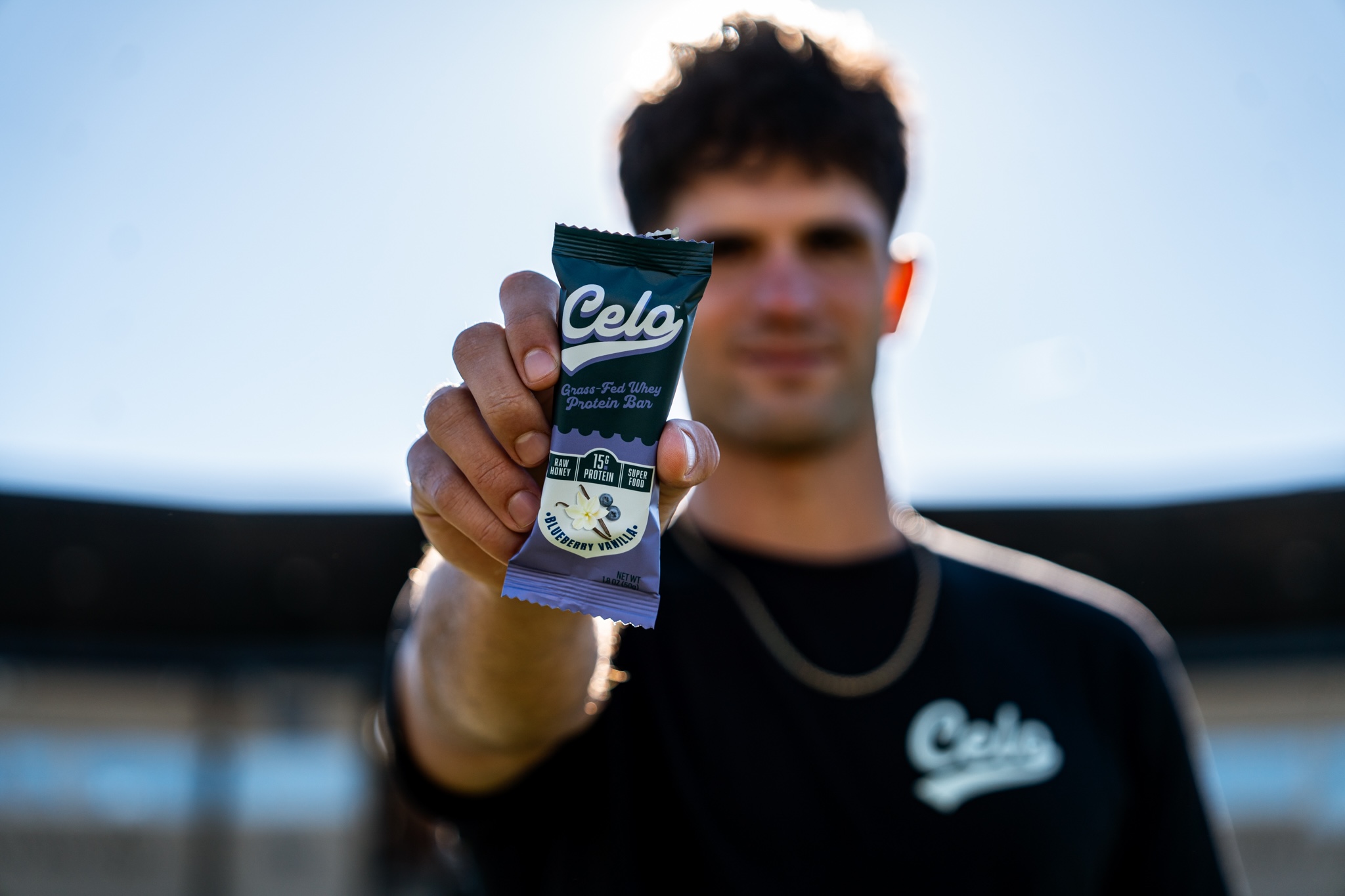
When Lucas Costello transferred to the University of Miami for his senior year, he expected baseball to be his endgame. He saw the move as a chance to finish his college and baseball career at home in Miami.
He never expected his time as a ’Cane would spark the idea for a company that would take off shortly after he graduated.
Costello is the co‑founder of Celo, a nutrition company that makes bars using whole food ingredients and a commitment to better fuel. The company launched in November 2025 and its first run of bars sold out almost immediately.
Every sale is driven by the community, word of mouth and a belief that clean nutrition should be accessible and real.
Celo didn’t start in a boardroom, it started in dugouts, weight rooms and long days on the UM baseball field.
Before his final season as a ‘Cane, Costello had just come off the high of a College World Series run with Wake Forest. The shift from a winning streak to a year marked by injuries and tough losses hit hard. He learned to keep showing up and how to stay steady when momentum wasn’t on his side.
Those lessons became the foundation of how he leads today.
“We still had to show up. We still had to do everything we could,” he said. “ We still had to pull for each other. We still had to find the fun in it.”
Costello said head coach J.D. Arteaga was one of the most influential figures he worked with at UM and someone who shaped the way he now leads in business.
“J.D led that every single day,” he said. “That set the foundation for selling nutrition when things aren’t looking like they’re going your way.”
Costello arrived at UM after three strong seasons at Wake Forest, but his connection to Miami runs much deeper than a transfer portal decision. He had grown up close with Arteaga’s son, a friendship that started in high school and kept him tied to the Arteaga family even while he wasn’t in Miami.
Arteaga had spent two decades as an associate coach and stepped into the head coach role in 2024.
When Arteaga took over the program, Costello saw the chance to come home and play for someone who had been part of his life long before college baseball.
The move felt like a full‑circle moment and quickly became a crash course in leadership, resilience and discipline that would later shape his approach to entrepreneurship.
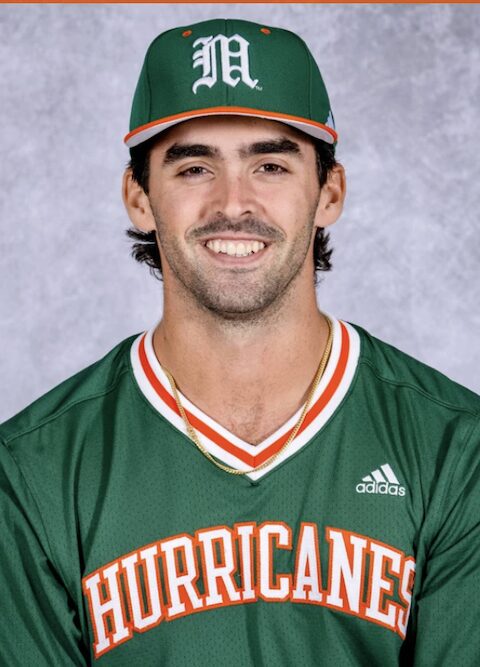
That season wasn’t easy. Injuries hit early and the roster lacked the depth Arteaga would build years later. But Costello remembers the tone the coaching staff set every day. There was no room for sulking, no surrender and no room for excuses.
“You still show up. You still find the positive. You still pull for each other,” Costello said. “That year taught me how to lead when things aren’t going your way.”
Those lessons became the backbone of Celo.
When he and his business partner, former Wake Forest teammate Adam Sisiri, decided on a whim to create a healthy bar during a phone call in October 2024, Costello approached the idea with the same mindset he learned at UM: show up every day, build momentum and keep going.
“I couldn’t stop thinking about it,” Costello said. “I knew right away that was it. That was the moment.”
Costello and Sisiri had always shared an interest in health and nutrition. Both had lived the grind of Division 1 baseball, where days started before sunrise and didn’t end until long after practice.
They knew firsthand how much food choices affected performance, energy and recovery. They also knew how few convenient options existed for athletes who wanted real ingredients instead of artificial fillers.
The idea for Celo clicked instantly. Costello describes it as a moment he couldn’t shake.
From that day forward, he poured the same intensity he once reserved for baseball into building a company from scratch.
He called professors, entrepreneurs and anyone he knew who had ever started something of their own. He and Sisiri interviewed manufacturers across the country.
They worked through more than fifty iterations of their bar with food scientists, adjusting texture, crunch, sweetness and ingredient lists until it matched their vision.
They refused shortcuts. They refused artificial sweeteners. They refused anything that didn’t align with the values they had carried since their playing days.
“Rome wasn’t built in a day, but it was built every day,” Costello said.
The way he builds Celo today is tied closely to what he learned during his time at UM. Costello credits UM with more than just athletic memories.
“I think UM has an aura to it,” Costello said. “When you’re there, you feel like you can do anything.”
Being surrounded by students who cared about health, wellness and personal growth helped him see the demand for a product like Celo long before he realized he would be the one to build it.
Conversations with teammates, strength coaches and trainers at UM opened his eyes to the psychology of nutrition.
Some players cared deeply about what they put in their bodies. Others didn’t. That contrast taught him that a product had to be both healthy and genuinely enjoyable if it was going to make a difference.
“If you’re not fueling yourself right, you feel it,” Costello said. “Those days add up. You start to understand how much nutrition matters.”
His strength coach at UM, H.R. Powell, played a quiet but meaningful role. Powell often pointed out the ingredients in team snacks and questioned why certain products were being used.
Those comments stuck with Costello. They became part of the foundation for Celo’s ingredient standards.
Celo didn’t take off overnight. It grew the way Costello learned to grow as an athlete — one day at a time. Costello and Sisiri built their team the way they once built a lineup.
They look for what Costello calls “mental athletes,” people who learn fast, care deeply and show up every day ready to contribute. They’ve shaped a culture where attitude outranks experience and passion carries more weight than ego.
They’ve grown slowly and intentionally. No paid ads. No shortcuts. No attempts to buy a community. Instead, they’ve built one from the inside out, relying on authenticity and the belief that a good product will speak for itself.
If Costello could go back to his senior year, he said he would network more. Shake more hands. Meet more people. Not because he regrets anything, but because he now understands how powerful the UM community can be.
He encourages current students to try things, even if they feel unprepared.
“Don’t be afraid to look stupid,” Costello said. “Everyone has ideas. Execution is what matters.”
His advice on nutrition is just as direct. Eat real food. Avoid the artificial stuff. Prepare ahead. Treat your body like it matters, because it does.
Celo may be a young company, but its foundation was built long before its first bar hit the market. It was built in the weight room at 6 a.m. and the dugout after tough losses.
It was built in conversations with coaches who taught him how to lead and teammates who taught him how to care. It was built at UM, where Costello learned that discipline, resilience and community are not just athletic values. They are entrepreneurial ones.
And now, as Celo continues to grow, those lessons are baked into every bar.