


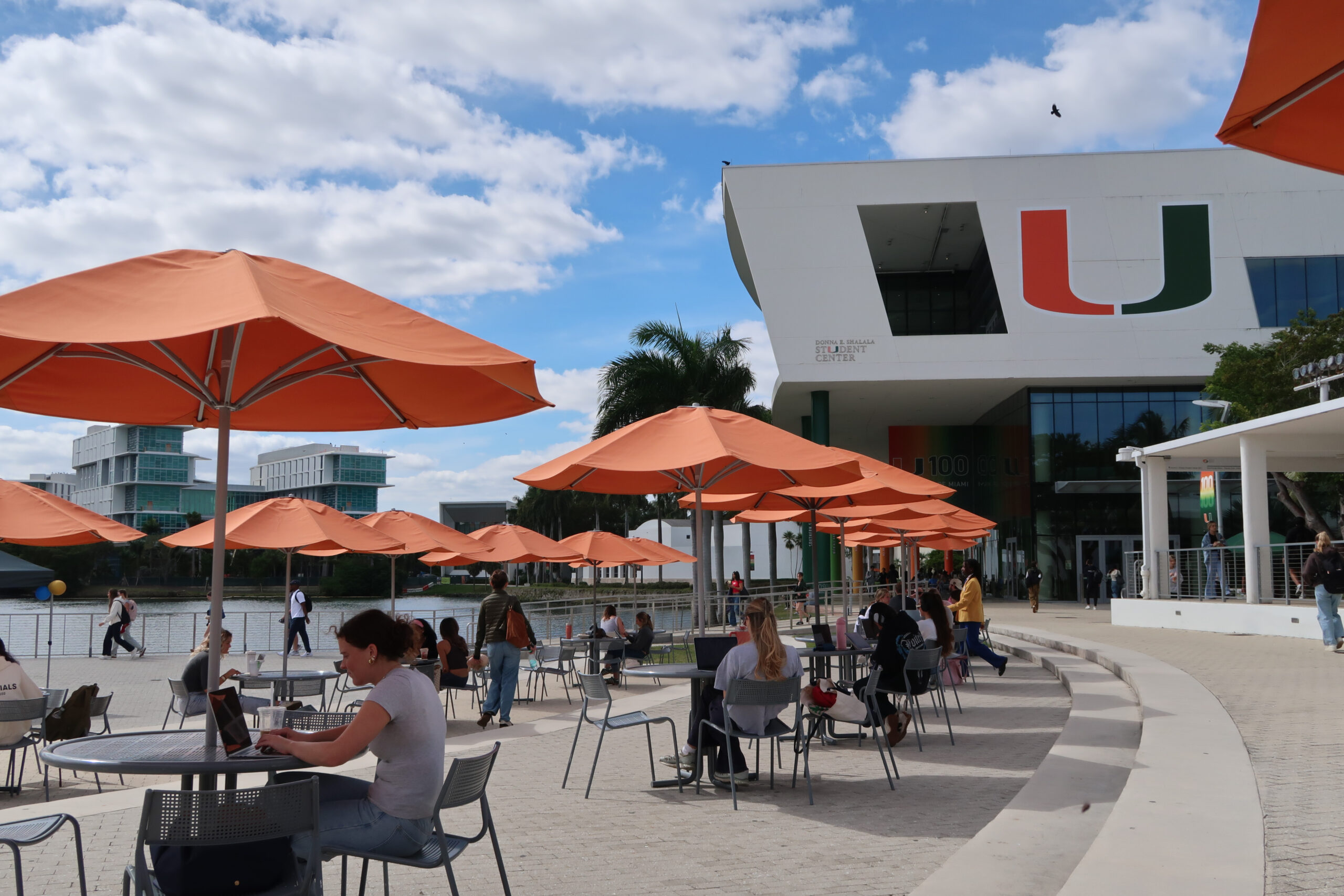
The University of Miami’s tropical climate and top-tier student life is proving successful in keeping “seasonal depression” at bay for many students.
Seasonal Affective Disorder, commonly known as seasonal depression, disproportionally affects those aged 18 to 30. Common symptoms include feelings of sadness and low energy, a loss of interest in activities, oversleeping, trouble concentrating and anxiety. Seasonal depression is diagnosed in 5% of U.S. adults and there are several treatments available, including light therapy and antidepressants.
Scientific research has attributed the disorder to changes in a person’s biological clock, a brain chemical imbalance and a vitamin D deficiency. Less sunlight during the winter months decreases the amount of vitamin D produced in the body, creating lower serotonin levels that can negatively impact one’s mood.
Sophomore Anya Beniwal, a Boston native, experienced downturns in her mood during the winter months before coming to UM.
“Boston in January is pretty bad because you wake up early for school, it’s so dark, and just sitting inside all day didn’t help,” Beniwal said. “The darkness is the worst part.”
As the winter months approach, college students across the country may begin to feel sad, tired or experience a decrease in their energy levels. But the year-round warm temperatures and sunny days in Miami tend to uplift students’ moods at UM.
Weather appears to be a driving factor in students choosing UM considering that the school draws a large crowd from the northeast regions of the country.
“Aside from my scholarship, the weather is definitely part of why I chose this school,” Beniwal said.
In addition to Miami weather, UM’s inviting campus and exceptional campus life, ranked at #8 in America by Niche, make students less of a target for seasonal depression.
“I genuinely love the University of Miami. From the moment I first visited, I felt at home,” a sophomore said in a UM review on Niche. “The campus in Coral Gables is beautiful with palm trees, Lake Osceola, and constant Miami sunshine that creates a perfect mix of peaceful and energetic.”
Many students have described UM as an exemplary college environment.
“The campus is the best. I love studying at different spots, and because of the nice weather, this is possible year round,” a freshman said in a UM review on Niche.
On the other hand, Miami’s weather is not a magical fix for all students. Ananya Uttamchandani, a sophomore from Nigeria, still experiences slight symptoms of seasonal depression during the winter months.
“I get tired earlier just because the sun sets so early and I’m not used to that,” Uttamchandani said. “So I try to go to bed earlier which helps, and I wake up earlier since the sun is up.”
A study supported by the National Library of Medicine used surveys to evaluate students’ moods in the fall and the winter months. The study found that students from non-seasonal hometowns are more likely to develop symptoms of seasonal depression than students from seasonal hometowns.
Because Nigeria is closer to the equator than Miami, its climate is less seasonal than Miami’s. Therefore, Uttamchandani’s tiredness during winter months corresponds to the results of the study.
The study also determined that seasonal depression has a stronger correlation with climatic variables than with latitudinal position. It found that seasonal depression accounts for 9.7% of recurring depressive symptoms in New Hampshire, but only 1.4% of recurring symptoms in Florida.
With daily temperatures reaching 90 degrees Fahrenheit approximately 130 times a year in Miami, a lack of warm weather is certainly not a problem for UM students.
“The biggest reason for my improved mood in Miami is the weather,” Beniwal said.
UM students like Beniwal have found comfort in Miami’s never-ending warm temperatures and sunshine.